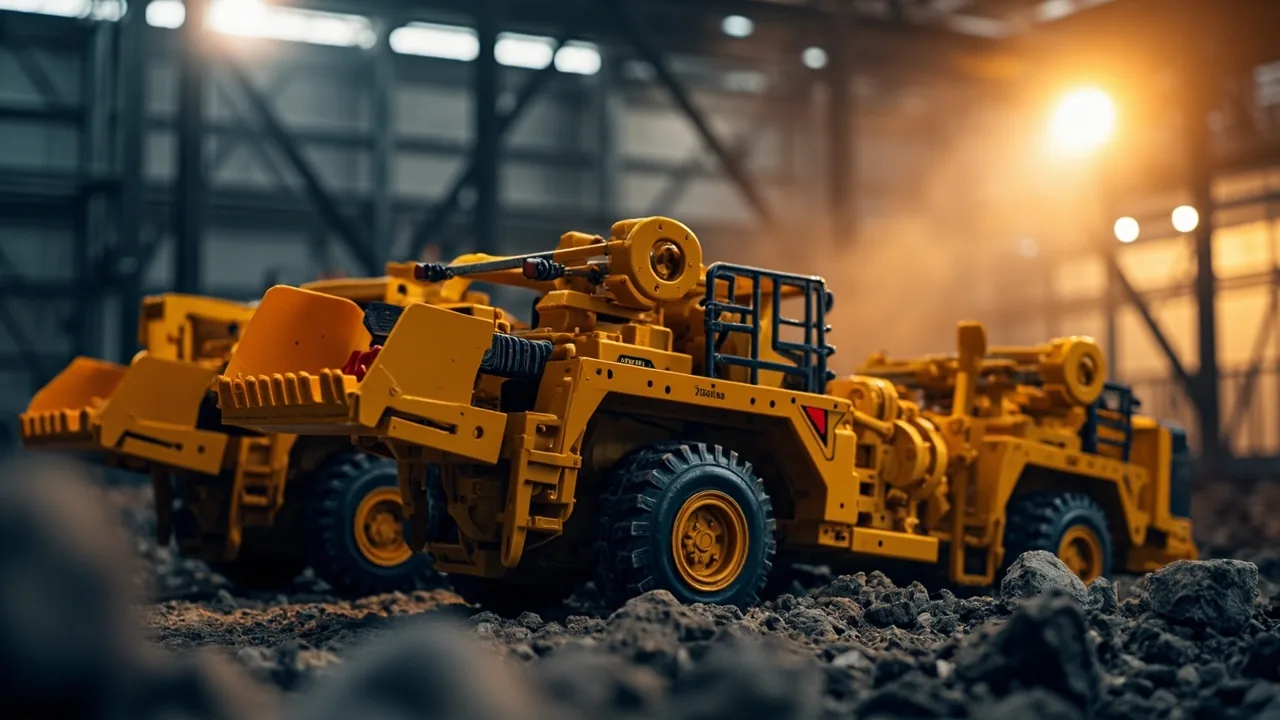

A mobile rock crushing plant puts a feeder, crusher, conveyors and screens on one wheeled or tracked chassis, producing 50 to 500+ tons of aggregate an hour on site. Financing spreads its cost into payments that track the work, so the price doesn't swallow your cash flow.
These plants crush aggregate where you are working, so you are not trucking raw rock to a fixed yard miles away. The whole plant follows the job from site to site. For a Canadian contractor or quarry, a modern crusher improves both efficiency and margin. The obstacle is the price, and that is what equipment financing is built to solve.
Understanding Mobile Rock Crushing Plants
A mobile rock crushing plant is a chain of components on one chassis. A feed hopper takes the raw rock. A primary crusher, usually a jaw or impact unit, does the heavy breaking. A secondary crusher, often a cone, sizes it down further. Conveyors move the material along, and a screening deck sorts it by size. The plant rides on wheels or tracks, so you can move it between sites easily.
Capacity ranges from compact machines doing 50 tons an hour to large plants past 500. Before you arrange funding, decide how much you need to produce and what material you are feeding the crusher, because that determines which plant fits both the work and your budget.
Why Equipment Financing Makes Sense
Equipment financing gets the machine earning for you without draining your bank account to buy it. Instead of one large cheque, you spread the cost over payments that line up with the money coming in. For a seasonal operation, where revenue swings across the year, that alignment matters most.
In aggregate work, cash on hand covers payroll, fuel, and unexpected costs. The Business Development Bank of Canada sums up the trade-off: “In most cases, it's cheaper to buy up front than leasing to own. But if you're in an unstable or fast-growing business, leasing may put less strain on your cash flow.” (BDC) Financing keeps that flexibility while still putting a crusher on site for your customers.
Canadian Tax Considerations
Under Canadian tax rules, you may be able to claim Capital Cost Allowance (CCA) on a financed machine. The federal immediate-expensing provisions for eligible equipment can also give Canadian-controlled private corporations significant relief. A tax professional can tell you how the numbers work for your situation.
Financing Options for Rock Crushing Equipment
The main ways to finance a crusher are leasing, a loan, and a sale-leaseback, and the right one depends on your books and whether you want to own the machine in the end.
Equipment Leasing
An equipment lease lets you use the crusher for a set term in return for regular payments. At the end you choose: buy it at fair market value, trade up to newer equipment, or return it. Leasing protects your capital, and operating lease payments are often fully deductible as a business expense. The Canada Revenue Agency's guidance on leasing costs says to “Deduct the lease payments incurred in the year for property used in your business.” (CRA)
Equipment Loans
An equipment loan buys the machine outright, with the crusher itself as collateral. Once it is paid off, you own it free and clear. You build equity as you go, and the long-run cost is often lower than a lease, but you will need more cash up front.
Sale-Leaseback Arrangements
A sale-leaseback is for a crusher you already own: you sell it to a finance company and lease the same machine back. Your equity becomes working capital quickly, and the plant keeps running. It works well when you want to tidy the balance sheet or free up money for something else.
Other Financing Solutions
Other financing solutions include rent-to-own deals and an equipment line of credit, which some companies use to acquire several machines over time. Manufacturers and dealers also run vendor programs, sometimes with a faster approval path designed for heavy equipment.
Benefits of Financing in Canada
Financing through a Canadian provider has advantages beyond protecting your cash. It gives you access to newer, more efficient machines that you might not afford with a straight purchase. A current-generation crusher can use less fuel, cost less to maintain, and produce more tonnage.
Payments are also predictable, which makes budgeting easier. Instead of an irregular capital expense, you build a steady payment into the operating budget, which helps when your contracts run for years.
Tax treatment matters too. Under Canadian law, owned machines, including those financed with a loan or capital lease, may qualify for Capital Cost Allowance against taxable income. Operating lease payments usually deduct as operating costs, while a purchase lets you claim depreciation over time. The result depends on your structure and the deal, so check with an accountant before you sign.
Choosing the Right Equipment Financing Solution
The right financing solution depends on how long you will run the machine, whether you want to own it or stay free to upgrade, your cash flow, and your tax plan. Leasing tends to fit if you want to stay current with a lighter monthly payment. A loan usually fits if you want the lowest lifetime cost and equity.
| Lease | Loan | |
|---|---|---|
| Monthly payment | Lighter | Heavier |
| Total cost | Can run higher over time | Tends to be lower overall |
| Up front | Little or nothing down | More cash needed |
| End of term | Buy, trade up, or return | You own it, along with the risk if it ages out |
The Application Process
The application process helps the lender assess two things: you, and the machine. Expect to provide financial statements, bank statements, your business registration, and the specifications of the crusher you want. Having that ready speeds things up and improves your chance of approval.
The credit review looks at your history, how steady your revenue is, your time in business, and what the equipment will be worth later. For specialized equipment like a crusher, a lender may also consider the industries and commercial work it will serve.
Many lenders take applications online and return a decision in 24 to 48 hours.
Ready to finance a mobile crushing plant? Apply for equipment financing or estimate your monthly payment.
Frequently Asked Questions
What is a mobile rock crushing plant and what is it used for?
It is a self-contained crusher on wheels or tracks that travels between job sites. You feed it rock, ore, or recycled concrete, and it produces sized aggregate for construction, road work, and infrastructure. Its mobility makes it most useful on remote jobs, or anywhere hauling raw material to a fixed plant would be expensive.
What financing options are available for rock crushing equipment in Canada?
Leasing, an equipment loan, or a sale-leaseback are the common routes. Each differs on payments, taxes, and whether you end up owning the machine. The best fit depends on your cash flow and how long you will keep the crusher.
How does equipment financing preserve working capital?
It replaces one large upfront payment with regular payments timed to your revenue, so cash stays free for payroll, fuel, and the unexpected. That matters most for seasonal businesses, or anyone with money already tied up elsewhere.
What are the tax benefits of financing rock crushing equipment in Canada?
There are several. Operating lease payments are usually fully deductible as a business expense, which lowers taxable income. If you buy, Capital Cost Allowance lets you claim depreciation over time. The federal immediate-expensing rules may also let a Canadian-controlled private corporation write off the full cost of eligible equipment in the year it is bought. Confirm the details with a tax professional.
What is the typical application process for equipment financing?
You submit your financials, credit information, and the details of the machine. The lender weighs your revenue, your time in business, and your credit history. Many lenders now handle the whole process online and decide within 24 to 48 hours.
How do I determine the right payment terms for my equipment financing?
Start with your cash flow, your revenue outlook, and how long you will actually use the machine. Short terms mean bigger monthly payments but less interest overall. Long terms lower the monthly payment but cost more in the end. Then decide whether you would rather stay free to upgrade or build equity by owning.
Share this article
Need Equipment?
Get approved for equipment financing in as little as 24 hours. No obligation application.
Get a Free QuoteOr call us directly
1-833-924-9554